
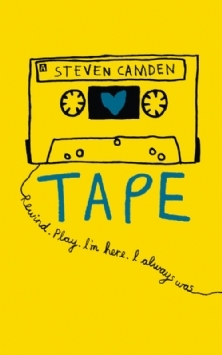
First published: 2014
Pages: 363
Source: HarperCollins UK via Netgalley (thank you)
Record a voice and it lasts forever… In 1993, Ryan records a diary on an old tape. He talks about his mother’s death, about his dreams, about his love for a new girl at school who doesn’t even know he exists. In 2013, Ameliah moves in with her grandmother after her parents die. There, she finds a tape in the spare room. A tape with a boy’s voice on it – a voice she can’t quite hear, but which seems to be speaking to her. Ryan and Ameliah are connected by more than just a tape. This is their story.
Thoughts: A modern story with a nostalgic edge, Tape perfectly intertwines the lives of two thirteen year olds; Ameliah and Ryan. Living decades apart, the two tweens have more in common than what you initially expect - both are united by tragedy and consequently, are tied by a tape.
Starting chronologically in 1993, we meet introvert Ryan who has recently started living with his dad, new step-mother and obnoxious step-brother, Nathan. Due to the loss of his mother, Ryan is left feeling lost and turns to a tape-recorder in order to help voice his feelings. It is during his intimate recordings that Ryan also confirms his attraction for Eve, a slightly older girl who he admires from afar. The tapes remain untouched until 2013, when Ameliah moves into her Nan's after her parents are killed in a car crash.
Ameliah finds the tapes among her parent's old belongings, including her mother's old guitar, and ultimately becomes engaged in the young boy's recorded life. While Ameliah settles into her new life at her Nan's, we witness her struggles as the pressure of upholding friendships, while juggling the loss of her parents and growing up in modern times is placed onto her. Due to her feelings of isolation and alienation, Ameliah finds comfort in her precious tapes.
Similarly, twenty years prior, Ryan's story parallel's Ameliah's whereby Ryan shows symptoms of isolation and confusion, mainly through his tape journals and inner thoughts; 'Ryan looked at Dad and wondered if he even remembered ever being thirteen'. Often, we find that both Ameliah and Ryan possess the same thoughts, questions and even the same events take place between the two tweens with some minor alterations:
From Ryan's story:
- Is she naked?
- What are you doing?
- Answer the question, Mr Bond, was she naked?
- Who?
- The girly you were dreaming about.
From Ameliah's story:
- What time is it?
- It's nearly half nine. What were you dreaming about, was it that boy?
- In your dream, was he naked?
The analogous plot helps in creating a comfortable and warm relationship between the two characters yet it is mistakably overexposed in the blurb, leading to readers predicting the novels purpose and direction. Because of this, any initial surprises in the storyline are already outdated by the time we reach them in the novel.
Another flaw evident in this book is the writing style, which mimics the style of James Joyce. Seen in the example above, the dialogue between the characters is presented in a childish and simplistic way yet following it, in its merge with the character's thoughts, was difficult. Often I was left questioning who was thinking and who was talking? It is presented as if the reader should obviously know who's saying what. However, contrasting this confusion, the transition from Ameliah's point of view over to Ryan's was apparent through the use of past and present tenses, which I found entertaining and also helpful.
Tape was a unique and quirky novel loaded with well-developed characters with themes of loss, hope and love intertwining between the lives of the two main characters; Ameliah and Ryan. Camden successfully tells the story of these two tweens coming of age - their stories set decades apart - without slipping into the sci-fi genre. The difference in time helps particularly highlight the changes of communication via modern day technology without forgetting the importance of friendships and family. I particularly liked the nostalgic use of the tape recorder, which showcased how technology can be easily outdated yet it can still be used to communicate in years to come.
My rating: ★★★


Be First to Post Comment !
Post a Comment